Psychological Safety in Pain (Part 2)
Part 2 Creating Psychological Safety - follow-up of the Reflection notes/thoughts on pain: the universality of illness and its intensely private, often lonely, nature.
I left the cliff hanger question yesterday of: so how can we create and apply ‘psychological safety’ (Edmondson) in pain?
I will attempt to share some thoughts and reflections I have been mulling over – post migraine / pain ‘hangover’. For those unfamiliar with the uniquely individual isolated (un)chartered terrains of pain (and in solidarity with those who know too well the thorny paths) it is a strange there but not quite there lingering sensation of having been to the depths of somewhere profoundly altering yet settling into a new found space/place that one is coming round from.
Firstly, thank you to those who shared how they found the writing on the loneliness of pain “profound”, “poignant” and “courageous”, amongst other phrases of appreciation I would feel shy to share – thank you for the prayers and well wishes dear friends and those I do not even know.
The first thing I notice is the expansiveness (Basit) that sets in following the constriction (Qabid). Also these are two beautiful names/attributes of God: Al Basit and Al Qabid. I was able to breathe this morning with relative ease for which I am so deeply moved and grateful and provided moments of awe and joy along with thinking deeply about the cyclical nature of suffering, knowing only too well that it is not long before another bout of discomfort at best, or mind-altering glass shattering pain that could hammer home in any form. I am not alone, virtually everyone I know is in some degree of suffering. Some of the closest and most beloved to me suffer (physically, mentally, spiritually, environmentally, internally, externally) so intensely and chronically that I cannot help but be left wondering on both the isolating and universal experiential nature of this topic regularly and how to cultivate feelings of emotional and psychological safety. So, I have begun to write. Not for anyone but just a place to air thoughts in what can otherwise feel like long term suffocation. I am not too bothered as I once was about the style or perfection, or ‘academic level’, or it even being ‘well written’, beautiful grammar(!), or ordered in a particular way. I guess that is what has ‘freed’ me. It does not matter to me whether this is read now or in a hundred years when I no longer exist, but perhaps my writing may. I will write raw and from my heart – that is my personal commitment.
**As a side note: In recent months I have heard from a few people saying they are too afraid to write or that they are not ‘academic enough’ – I will say this, it took me decades, until recently as this July 2024 to start writing and publishing beyond the restricted ‘academic’ (which by the way I was far from fond of and caused me no end of grief writing that PhD thesis! If you are interested, you can read about my journey and educational woes here for further context).
In a world that is becoming increasingly automated and infused with AI generated content I think we are being starved of raw, natural, real, heart felt words and experiences that can not be ‘generated’ but emerge and develop through feeling, embodiment, experience. So, write, whoever you are, however you are. We need to keep replanting the worlds content with raw genuine words of real experiences not shiny so called clean Instagram ready glossy posts and AI formed words (not that there is anything necessarily wrong with the tools depending how it is used with what intent and purpose – it can be helpful for people to use AI, myself included so I am not diminishing it – I just think raw real experiences could be shared and encouraged more of). Not everything will resonate or be helpful for everyone. It might help one person though. Right, so to psychological safety we go…
What is Psychological Safety?
(Some random raw thoughts with no destination while travelling through my mind and being typed out)…
I will have a go at writing what I think it is, drawing on various readings, research, thoughts, insights and experiences to make it more accessible and less like a rigid/final sounding definition from a journal paper. I hope to convey something relatable that involves an iterative process of ongoing work that we can personalise to our own contexts and think through in our own ways and how it applies to us.
In essence we can think of Psychological Safety as a felt sense and knowingness that it is safe to express how we feel and what matters to us without fear of judgement, being diminished, disregarded, gaslit or someone telling us our reality is not reality, no arguments or debates. It is when our emotions are held by us and those in relation to us with deep care. Basically, our nervous system feels calm. If it is activated, know that it is highly likely that psychological safety is compromised (actual or perceived).
It does not mean that at appropriate times when the volume of intensity is turned down and or safety is established and felt that we cannot reflect different perspectives to help, support, guide and growth. I think one of the major failings of some of the modern-day approaches to counselling and therapy are this idea of just listen and accept everything as is. This in my view is an injustice (and lazy approach) to fellow brothers and sisters in humanity. Of course, there needs to be wisdom in how we speak and when, and what is appropriate or not for who and context matters. Sadly, in the absence of teaching and cultivating nurturing wisdom and instead churning out quick courses and quickly ‘qualified’ people then well… we get what we get. This is not how we should be working, where tender nurturance and care is required. Working with emotional safety is nothing short of brain surgery! We must be caring and thoughtful what ‘nerves’ we touch there. With the deep wisdom that was taught through the Prophetic ways there has always been the idea of counsel and advice that is not a passive approach. We do not let a child walk into fire or into the road, likewise if we can prevent someone from harm it is a fundamental principle of a believer to do so. The big question is how, when, and critically to create a safe relationship with someone where there is reciprocity of care, of trust, of knowing that you sincerely wish well for each other, that it is coming from a good and God-centred place with deep wisdom and reflection and you work on it together, and you keep working on it.
This ‘relation’ can be any relationship – any person whom we are interacting with and in communication with. This feeling of safety will turn down the volume on our sympathetic nervous system or what’s come to be understood as ‘fight flight freeze’. It is my observation but most of us live in a heightened state constantly making this difficult which is why lots of emotions seem to ‘fly off the handle’ quite quickly. Particularly in chaotic cities where there is a constant blaring of noise with several sounds not just one, with glaring lights as if a constant disco, every billboard flashing lights, even menus at cafes now bright and flashing text rolling over fast, toxic smells under the guise of fruit flavoured cigarettes fancified through new names appealing to kids, car parking hounds and constant surveillance, anything that can make money at the cost of human sanity and emotional safety. Countless times I have observed at a particular yellow box near where I live that people go into a survival mode and are willing to risk hitting another car ironically but terrified to get into that yellow box with several menacing cameras looking down. Ridiculous design but one I am sure makes thousands if not millions of pounds a year. Cost to human life: intense heighted toxic chronic stressors which lead to inflammation and a whole host of diseases as we know (because let’s face it it’s not just these, we have a million things stressing upon us - these examples are just some of the micro aggressions we face in our days or there will be something similar). Personally, I think it’s a public health issue but that’s for another time. I think my point is impressed upon now – simply our environment does not allow for us to calm, to down regulate. How can we create safety in our environment? We need to collectively be thinking of these solutions daily.
There is a constant onslaught of assault on our senses at all times, whether that is through pain, environmentally as mentioned, mentally, in relationships, worries around health inequalities, economic strains - it is constant. Some may fare better than others. If we have experienced trauma, if our central nervous system is compromised in any way, if we have a disability, a chronic illness, feel under pressure, are caring for others, are struggling with health, or finance we are far more likely to feel the intensity of these ‘assaults’ on our systems. I liken it to constantly feeling like drowning with years of pressure and stressors from various situations and experiences with little room to keep the head above water. It makes it difficult if someone or thing throws another bucket as it were. But there’s not an iota of room sometimes to contain that water. If we have emptied some of the water then despite the difficulty of having another bucket thrown at us we may well have some capacity to cope with it and find our way. If we are already drowning, where is the capacity? This is when we are in a ‘crisis’ situation and the sad thing is some people occupy this place for long periods and never move out of this position yet through their faith, internal resources or something remarkable they hang in there but at a cost. A huge human cost. Let’s not forget some people don’t/cant’ hang in there and we lose them. Everyone’s internal and external resources are different. Another reason why we simply can’t judge someone. As I always say firmly, you can have all the faith in the world but still feel suicidal, you can have intense God-consciousness and still be squeezed to death by pain. I know some wonderful people – faithful believers – Muslims – who sadly ended their life. The people who still think that people who are depressed or unable to move past their traumas are weak in faith: I would urge a reflection on this. I can tell you it is extremely damaging to say these words to someone, that their faith is weak or they just need to read more Qur’an or pray. Don’t say it please. Save their life instead through the warmth of your character that embodies the faith, be their crutch, be their pillar, build them up and watch when one day you see the fruits of that. God provides from sources we could never imagine. We do not know what bounties He will shower on us or others. The person you help may be your door to Jannah (heaven) or the person who helps us may be our door to Jannah. Reciprocity again!
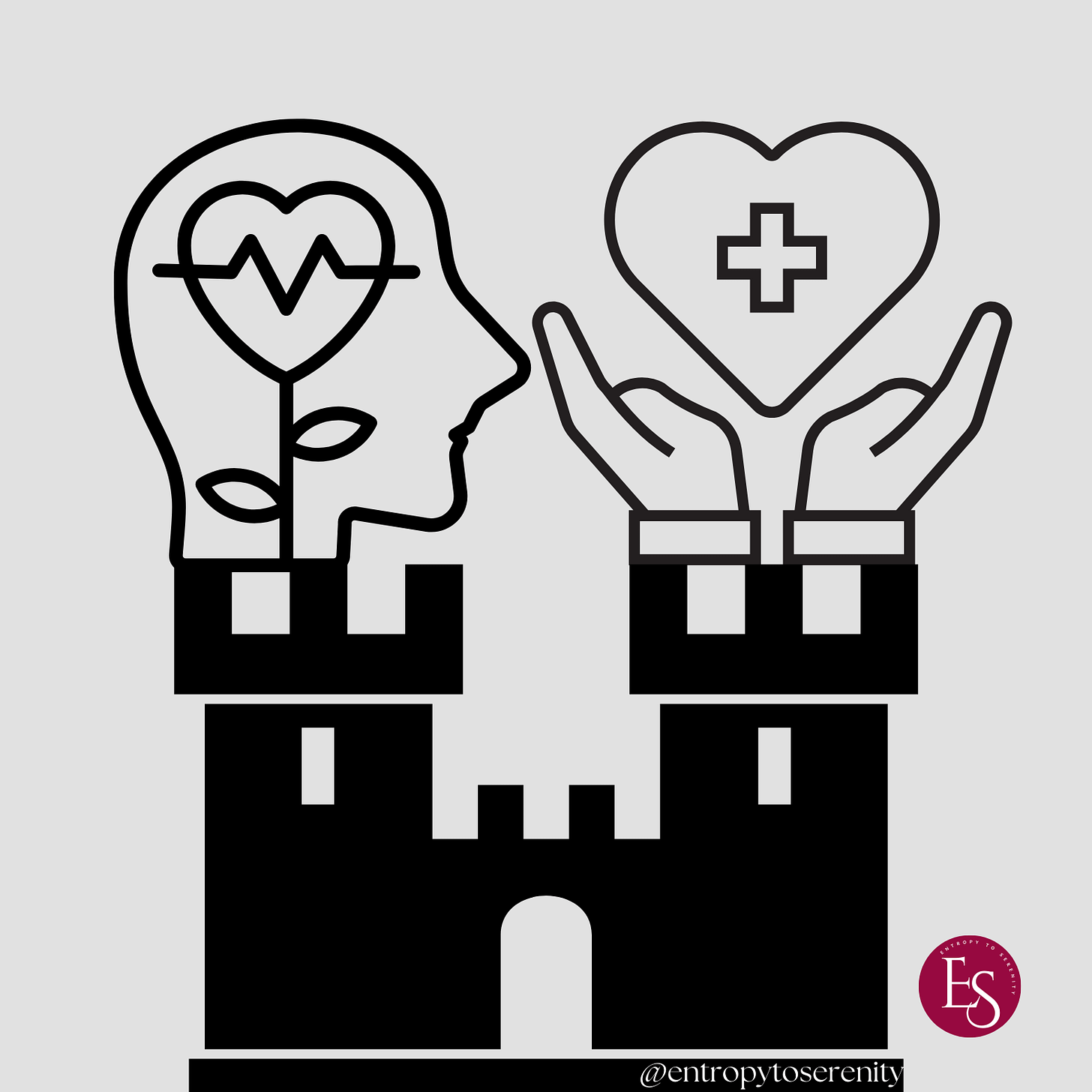
If we feel constantly attacked / unsafe emotionally then our defences will be up. Our fortress will be protected by defences of self-preservation which may be unhelpful techniques but benefit us in some circumstances for survival. However, most of us are not in a physical situation that requires ‘survival’ in the sense we may think. The more pervasive attack and the lack of safety we experience, is the emotional. In every moment our body is picking up on signals on a cellular level, our sensory organs are absorbing and computing so fast our environment: are we accepted, are we rejected, are we included, excluded? Are we wanted? Might we be shamed, embarrassed? The communication and look on someone’s face – is it friendly? Are they smiling? Are they still-faced? Frowning? Angry? Unpredictable? Warm? Safe? Think about all the people in your life who make you feel safe – truly safe. Emotionally safe. Where how you feel, your experiences, your interactions, your stories are heard without judgement, without attack, without questioning your reality in a way that makes you feel crazy. The next question we can ask ourselves is are we safe for other people? I often say this when I teach my Trauma and Spirituality Masterclass that when we say Salaam (which in its broader meaning includes not just wishing peace upon someone, but wellbeing, soundness, safety, wholeness) does our behaviour indicate the depth of salaam? Are we speaking in, communicating in (verbally and non-verbally) a ‘salaam state’? How consciously do we say salaam? Salaam but no warm smile? (Our bodies literally are affected physiologically through the release of dopamine, endorphins and serotonin when smiling, not to mention it is a Prophetic way (sunnah)). Salaam but holding anger or hatred towards someone? What can we each do in our lives to truly embody salaam? Try thinking of the full meaning and applying it next time you are greeting someone!
This has become longer than anticipated though actually I did not know where this would go which was nice (free-ing). It was like taking a long drive with no destination as such. Nice new way to write for me (and I hope encourages others too). I hope it was not too much of an arduous journey if you are reading this and instead, I managed to take you on an insightful thought provoking journey with some interesting views!
I will end with how I apply the 4 H’s of God’s names/attributes in my life. In my own healing journey, I use different attributes of God to draw strength within. At some point around 2 years ago these ‘4 H's’ seemed to really solidify for me in a holistic all-encompassing way what felt like a solid fortress of protection (Al Hafiz), guidance (Al Hadi), gentle tender forbearing calm-abiding kindness (Al Halim), and wisdom (Al Hakim). *Al means The in the Arabic.
Together they offer a mighty umbrella against the torrent of trials tests and sensory assaults we experience on a daily sometimes moment by moment level, especially when the nervous system is highly wired. I would encourage you to watch this video below and share with others to raise awareness of what sensory overload can feel like - just a small insight but one that may help you be aware of how to offer an emotionally safe presence to another:
Our brain signals perceive social threats such as rejection, betrayal, exclusion, criticism, shaming etc. similarly to physical pain activating areas of the anterior cingulate cortex (ACC) which is part of the limbic system and involved in the regulation of attention and emotion, inhibitory control, error monitoring, and motivation (Bush, Luu, & Posner, 2000). Emotional pain is as real as physical pain.
By drawing on the name Al Hafiz we are inviting in God’s guardianship-protection, feeling lost or worried about what is best in any given situation we are in need of guidance so we call upon Al Hadi. In the harshness of emotional turbulence, rocky relationships and or upsetting or challenging circumstances, ill health, fatigue, we look for gentle calm forbearance and we ask Al Halim to grant us that and help us to be that for ourselves and others. Ultimately with everything what we need most is wisdom in how we navigate so we connect with Al Hakim. Together these four create a solid all-encompassing protection and fortification for our mind-body-soul.
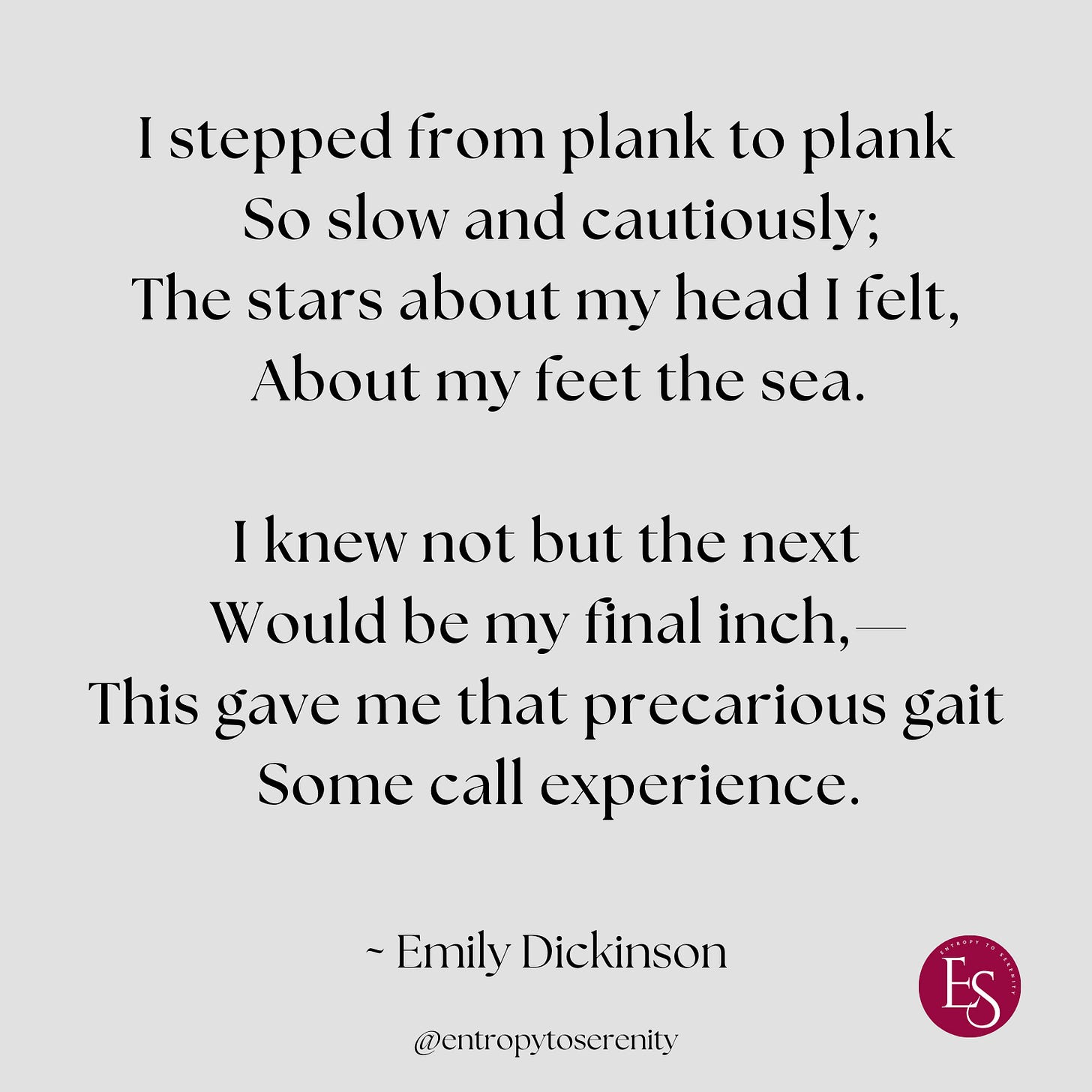
May God make us a source of comfort, ease, serenity, tranquility (sakinah), salaam and blessing (barakah) to all those who come into contact with us and bring those into our lives who will reciprocate and provide this, making us psychologically and emotionally safe for each other. As a special dear one in my life showed me: ‘one plank at a time’. When its too scary to look down the unknown path of uncertainty then let us together place one plank at a time and if we find splinters we commit to pulling them out together. This is how we hold each other together in what can be a frightening and scary disconnected world. Let’s commit to cultivating emotional safety within us and for those around us in the hope we can shift from these states of survival, pain and suffering to thriving and flourishing so that we may add something of value to this world we briefly inhabit.
.