Ramadan Fasting, Anxiety and Gut Health: A Trauma-Informed Approach
This article is now available in a video format on YouTube where I narrate it for those who prefer that format:
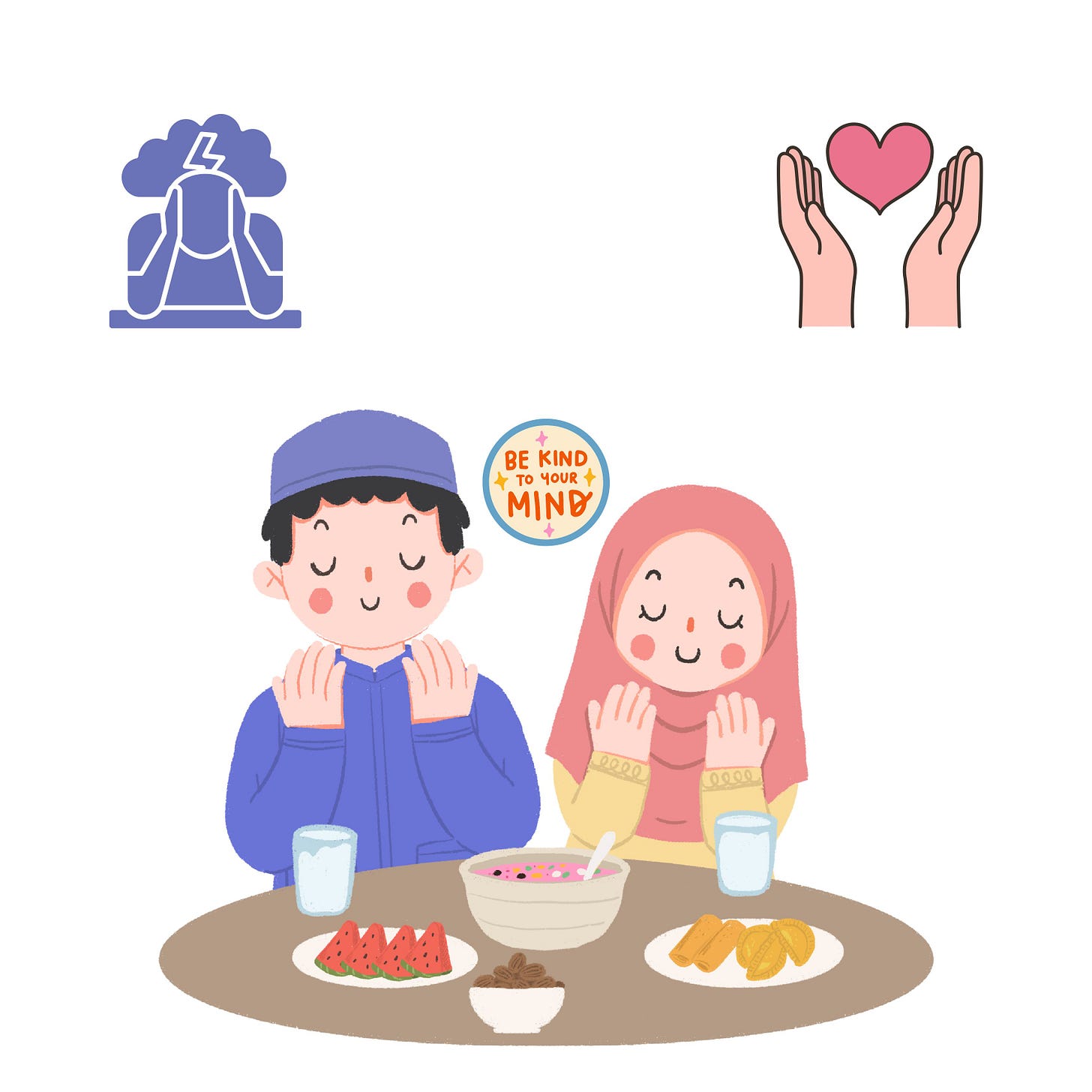
Over the past decade, particularly during Ramadan, I’ve frequently found myself reflecting deeply on the intersection of fasting, anxiety, trauma and gut health. This reflection is based on my personal experiences and the lack of resources and understanding on this topic, and the overlap of my professional interests as a Trauma-Informed Educator, Certified Clinical Trauma Professional and with a background in Psychotherapy training and a PhD in Health Psychology. I asked a question in my networks recently as I was curious: how do people cope when they experience gut impacting anxiety and sensory sensitivities whilst fasting, and any advice they had but there was near radio silence. I decided I should just take the initiative and gather my thoughts, experiences and ideas with some research and put something together that I hope may help others and be a good reminder for my future self if ever needed and as part of my own healing where there was no support and understanding of these conditions and I felt at a loss in my religion and pained by the lack of understanding leading to once doubting my own experiences. I hope this helps those who need it to feel understood, acknowledged and their experience validated mitigating the doubt that can emerge around conditions of which the complexities are little understood in society, medical practice and especially in spiritual contexts which can feel a very isolating experience. Often people will say it is simple, you either fast or you are not well enough to and therefore exempt, however with complex chronic trauma and conditions that are lesser understood this can be a lot more nuanced and complex, including the need to feel spiritually connected and wanting to fast and be near to Allah being associated with the act of fasting. It is important we start discussing these complexities and nuances and lived experiences a lot more than we do, instead of shutting down questions and reflective enquiries with black and white responses, only then will we understand and know better, God Willing. Ramadan can be tough when you can't fast as you'd like. But fasting is not the only form of worship or connection to Allah. Your struggles are seen, and your efforts, however small they feel to you, they matter. Even the act of trying to hold onto faith through pain and exhaustion is a form of worship.
Fasting can be a deeply spiritual practice, whilst potentially for some also emotionally evocative, and psychologically challenging, especially for those dealing with anxiety and the ongoing effects of trauma. The gut-brain connection plays a big role in how we experience both fasting and mental health. Stress, anxiety and sensory sensitivities and how the nervous system works (or is impaired) through chronic complex trauma can make fasting harder on digestion and the whole mind-brain-body for a number of reasons and will effect each person uniquely. Trauma survivors, especially those with complex chronic trauma, may experience dissociation and impaired introception (body awareness) (Fisher, J. 2017). The gut and the brain communicate intimately, and when one is impacted by stress or trauma, it can create a ripple effect that influences the other. In this writing, I will explore stress and the gut-brain axis, sensory sensitivities, migraines and sleep disruptions along with some tips to support a gentle approach for engaging with Ramadan and fasting.
How Fasting, Anxiety, & Trauma Affect the Gut
Stress & the Gut-Brain Axis
When we experience anxiety or trauma, the nervous system becomes activated, releasing stress hormones like cortisol and adrenaline. These hormones have an impact on the digestive system, which can lead to symptoms like bloating, nausea, and stomach discomfort. The effects depend on the individual’s baseline gut function and stress response. The connection between stress, trauma, and gut health is well-documented in both psychological and medical research. Chrousos, (2009) explain how cortisol and adrenaline, released during stress, impact digestion and contribute to gastrointestinal disorders. Van Oudenhove and Aziz (2013) consider the role of psychosocial factors and the gut-brain axis in functional gastrointestinal disorders, Dinan et al., (2015) explore how gut microbiota influence hormones like cortisol and affect mental health conditions, including anxiety and depression. Moloney et al., (2016) discuss stress and the microbiota-gut-brain axis in visceral pain with relevance to irritable bowel syndrome and how it leads to symptoms like nausea and bloating, particularly in individuals with trauma histories.
For women this can be exacerbated at different times of the menstrual cycle. Fluctuations in estrogen and progesterone throughout the menstrual cycle can exacerbate stress-related issues, anxiety, and trauma responses. These hormonal shifts may also increase pain sensitivity and stress reactivity, partly through their effects on the HPA axis, gut-brain communication, and cortisol regulation (Davis & Zautra, 2013; Li et al., 2020). This is reflected in Gabor Maté book: When the Body Says No (2003) and Bessel van der Kolk’s: The Body Keeps the Score, (2014), both of whom highlight how hormonal fluctuations can intensify trauma symptoms. The link between trauma and menstrual cycle dysregulation is not solely gut-related but primarily involves the hypothalamic-pituitary-adrenal (HPA) axis, which influences the hypothalamic-pituitary-ovarian (HPO) axis. While the gut-brain axis plays a role, trauma primarily impacts menstrual health through cortisol dysregulation, which disrupts reproductive hormone balance and ovulation (Chrousos & Gold, 2024; Davis & Zautra, 2013; Li et al., 2020).
Digestive Sensitivity and Fasting
Long periods without food can sometimes trigger digestive discomfort or sensations that become difficult to bear, especially if stress is already present. It can also evoke deep feelings and sensations of deprivation, food insecurities/challenges, experiences of neglect. There can be some seriously difficult sensations and pains going on to deal with and top this with sensory sensitivity and you have a whole load of extra pressure and demand on the mind-body, which can effect our capacity to connect spiritually. Another important point to note is that Trauma can create a disconnection between the mind and body, making it difficult to read cues of food, hunger, fullness, knowing when to eat or stop eating, which can lead to overeating, under-eating or not having an appetite or feeling extreme bouts of hunger, especially if there are delayed responses and one may be experiencing states of freeze/collapse or dissociation. It may also be helpful to think about sensory sensitivities to certain foods, textures and flavours and notice if they are playing a role in affecting feelings of discomfort and may be the cause of anxiety. For some when feelings of anxiety, stress or strain arise certain foods, textures and sensations can cause further anxiety or distress. Having this knowledge about the self (and others) can be really empowering and facilitate a process of healing.
Blood Sugar Spikes & Breaking the Fast
Avoiding blood sugar spikes during Ramadan is crucial for maintaining stable energy levels, preventing fatigue, and supporting overall health while fasting, so mindful eating at sahoor and iftar are key. Try creating a daily or weekly plan of what to eat when and giving plenty of time so as not to rush the body in any way. Being slow and intentional can help along with ensuring the right combination of foods for your particular health are consumed. Foods rich in fiber, protein, and healthy fats can help regulate blood sugar levels and provide lasting energy throughout the day. With deep trauma, sensory sensitivities and intense anxiety it is critical to attune to your own body with such careful compassion as if you were looking after a newborn child! It takes time and careful observation but the time invested will be worth it, God Willing. For those around someone who has experienced or is experiencing the ongoing effects of trauma you can be helpful by helping them become more attuned through noticing and observing patterns of need and what is going on and figuring out together a supportive plan for each day. During this time, remember to be gentle with yourself, especially if fasting or eating causes discomfort, and try to embrace the Rahmah (compassion, nurturing, loving-kind, protective, mercy) of Allah. If you need to adjust your fasting routine, know that Allah is understanding and compassionate.
Understanding How Trauma Manifests in the body: Muscles, Organs, and the Gut
Our bodies store trauma not only in the mind but also (and arguably moreso) within the muscles and organs. According to Bessel van der Kolk (2014), trauma is deeply embodied, meaning that physical symptoms often persist long after the initial event. Our muscles contain a high density of pain fibers, which is why we experience immediate and noticeable pain when we strain them or sustain an injury (van der Kolk, The Body Keeps the Score). However, trauma is also held in the body in more subtle ways, particularly in our organs, which contain fewer pain fibers. As a result, the physiological stress of trauma can manifest through digestive issues, headaches and migraines, and sleep disturbances, even when we are not consciously aware of the connection (Fisher, 2021).
The abdomen, holds the enteric nervous system (ENS) which is a complex network of neurons embedded in the walls of the gastrointestinal tract, often called the "second brain," due to its extensive network of neurons (Gershon, 1998) and as it autonomously regulates digestion, gut motility, and communication with the central nervous system. The gut plays a central role in storing trauma. Gabor Maté (2003) in his book ‘When the Body Says No’, highlights how chronic stress and unresolved trauma contribute to gut disorders, autoimmune diseases, and systemic inflammation. This aligns with findings in psychoneuroimmunology, where the nervous system, immune system, and endocrine system are all shown to be interconnected in the body’s response to stress (McEwen, 1998). The intestines, lacking extensive pain fibers, may not signal distress in an overt way, but symptoms such as irritable bowel syndrome (IBS), ulcers, constipation, and digestive discomfort often arise as a response to trauma. These can also be symptoms in conditions of fibromyalgia and M.E/CFS and others where disruptions occur to the central nervous system.
Somatic therapies, which focus on body-based healing, have been found to be highly effective in trauma recovery. Pat Ogden (2006) emphasises that movement-based therapies, such as Sensorimotor Psychotherapy, help the body process and release stored trauma. Techniques such as gentle rocking, swaying, walking, and trauma release exercises (TRE)—which encourage natural shaking and tremoring—can activate the body’s innate ability to discharge stress (Levine, 2010). Van der Kolk (2014) also underscores the role of movement in healing, citing yoga, dance, and breathwork as ways to reconnect with the body after trauma.
For Muslims also using the movements of salaah (prayer) in an embodied conscious way and reciting Qur’an and dhikr (remembrance) connecting to our Creator can have an added benefit of feeling safe and protected which is the core of trauma healing: establishing a sense and feeling of safety. The fluid movements of prayer, especially during sajood (prostration), can help regulate the nervous system, providing comfort and relief. The act of lowering oneself to the ground during prostration serves as both a physical and spiritual release, allowing the individual to surrender their worries and reconnect with Allah. We could incorporate focus on breath during salaah and moving slowly between positions as we reflect on the meaning and power of the reassuring words we recite such as in Surah Fatiha when we recite: Ar-Rahman Ar Rahim - The Most Compassionate/Merficul/Loving-Kind/Protecting/Providing (are all meanings encompassed in the one word Rahman) or “it is you we ask for help” (ayah 6), can help us in trusting that we are giving it to God as it were, to take care – this can offer some reassurance and knowingness that our Creator will and does respond.
Trauma can often cause a disconnection between the cognitive and somatic aspects of experience, leading to persistent bodily symptoms without clear psychological recognition (Fisher, 2021). What we think and understand and can intellectually make sense of can be very different to how we feel in our body for which sometimes there are no words, many experiences can be pre and non verbal making it difficult to communicate to ourselves and others what we are feeling and how we are affected. Engaging in guided somatic practices, especially mindful salaah, individuals can restore a sense of safety in their bodies, allowing for both physical and emotional healing.
To support trauma recovery, a holistic approach—including somatic experiencing, mindfulness, movement, and trauma-informed therapy—is essential. Trauma is not just a psychological wound; it is stored in the very fabric of our bodies. It is crucial to know and understand the various ways in which Trauma can show up in our bodies and how this may manifest during fasting uniquely for each individual. Self-observation and reflection are key and this idea from the Islamic tradition known as Muraqabah can be drawn upon particularly during this month as another way of connecting through our faith. Asking Allah to help us notice what is affecting us and how, with the intention of processing our experiences and healing.
Migraine and fasting
Whilst for most people headaches on the first day known as Fasting Induced Headaches (FIH) (Alwhaibi, 2024) are part of a normal adjustment process, it is worth noting how this may be different for individuals with chronic complex trauma who may experience exacerbated migraine symptoms due to neuroinflammation and altered pain processing associated with post-traumatic stress disorder (PTSD). Fasting, anxiety, and trauma can influence migraine pathways through neurogenic inflammation. Metabolic and stress-related changes during fasting may contribute to the release of neuropeptides like Calcitonin Gene-Related Peptide (CGRP) and Substance P, both of which promote neurogenic inflammation, a key mechanism in migraines. Anxiety and trauma, particularly chronic complex trauma, elevate stress hormones and inflammatory cytokines, sensitising the trigeminal nerve pathways and lowering the threshold for migraine attacks. This combination of fasting, emotional stress, and trauma may exacerbate migraine symptoms by enhancing inflammation and altering pain perception pathways (Dinan et al., 2015; Borsini et al., 2020).
Waking in the Early Hours: Trauma, Anxiety and Sensory Sensitivity
Waking up in the early hours before dawn for sahoor (pre-dawn meal) can be a source of anxiety, especially for those with trauma histories. It’s essential to approach this time with gentleness and care, as the body and mind may be more sensitive than usual. One way to mitigate this is by preparing as much as possible the night before, so there’s less mental and physical load during these early hours. Also, creating a calm and supportive environment—such as soft lighting and a soothing atmosphere—can help calm the nervous system.
In cases where this early wake-up time feels overwhelming, triggering and or is associated with distress or traumatic memories/sensations/feelings, it can be beneficial to have someone check in with you—perhaps via phone or video chat (if no one is available in person)—during sahoor or iftar to offer emotional support. If no one is available, or you’d prefer alone time perhaps watching a nice spiritually uplifting and supportive lecture or YouTube or listening to an audio may be helpful. Little adaptations can make a world of difference, creating a sense of safety, comfort and reassurance.
Understanding the connection with sleep patterns
Sleep disruptions are common during fasting, but for those with trauma histories, they may be more pronounced. The altered schedule of Ramadan—waking for sahoor and staying up for taraweeh and or tahajjud prayers—can exacerbate insomnia or lead to disrupted sleep patterns. This may lead to a cycle of increased anxiety, hypervigilance, and difficulty in entering deeper stages of restorative sleep. Studies show that trauma survivors have higher levels of stress hormones like cortisol, which can negatively impact sleep quality and exacerbate insomnia (Gordon et al., 2021, Morin et al., 2016). Try to nap in the day to gain some restfulness or utilise guided meditations and breathwork to bring in some moments of relief if sleep is an issue.
Practical Tips & Coping Strategies During Ramadan with Chronic Complex Trauma:
Stress & Regulating the Nervous System
Deep Breathing – Helps activate the parasympathetic nervous system (rest & digest mode). An example is 4-7-8 breathing (4 in, 7 hold, 8 release). Choose one that feels right for you, there are many different types and guides can be found on YouTube. Something simple like placing one hand on your heart, the other on your tummy (abdomen) and breathing in and out feeling your hands move can be comforting and regulating. You may want to recite a name of Allah while you do this, for example, Ya Halim (O Gentle, Calm Abiding One) on the In breath, Ya Wali (O Protecting Guardian/Friend) on the Out breath. You can change the names according to what you need and feel will resonate in your circumstance each time you try it. Alternatively, consider saying “Bismillah” (In the name of Allah) on each inhale and “Alhamdulillah” (All Praise and Thanks be to Allah) on each exhale, grounding your breath with the remembrance of Allah. Slow, deep breaths can activate the parasympathetic nervous system, helping to calm anxiety.
Dhikr & Mindfulness – Repeating simple phrases of remembrance/dhikr in English or your language so you can connect with the meaning and feel the support from the depth of the words: “There is no power or might except Allah”, “O Ever-Living, Self Subsisting in Your Mercy/Grace/Compassion I seek help/refuge, do not leave me to myself even for the blink of an eye”, “I place my Trust in God, He is The Best Guardian, Best Protector, Best Helper”. Engaging in dhikr (remembrance of Allah), such as repeating “SubhanAllah” (Glory be to Allah) or “La illaha ill-Allah” (There is no god but Allah), can help calm the mind and reduce anxiety. Drawing on different names/attributes of God such as Al Mumin (The Giver of Safety and Security), Al Salaam (The Source of all Peace, Soundness and Wellbeing), Al Hafiz (The Guardian Protector), go through the list of ‘99 names’ and feel into what resonates for your particular state in any given moment.
Progressive Muscle Relaxation – Tensing and relaxing muscles can reduce stored tension from trauma.
Gentle Movement – Moving in ways that feels helpful and good for you. Nothing strenuous or demanding. Choosing a YouTube video on gentle movement/stretches may help if you need a guide.
Using a Hot Water Bottle – This may help soothe the stomach and something warming can be comforting and feel supportive, especially in the hour or so before iftar you may find that you feel colder and your body temperature drops.
Adaptation & Mindful Eating at Sahoor and Iftar: Supporting Gut Health
Slow Eating & Small Portions: Avoid sudden spikes in blood sugar, which can trigger migraines. Start with dates & water, or protein first if something sweet may trigger a spike, followed by praying maghrib salaah before easing your body through gradually eating a nutritious balanced meal.
Avoid High-Sugar, Processed & Trigger Foods: Some foods (processed sugars, MSG, sulphites, dairy, gluten, wheat, artificial sweeteners and additives) may worsen migraine sensitivity and cause blood sugar imbalances and exacerbate symptoms of anxiety.
Sahoor & Iftar: Opt for meals that include protein, complex carbs, fiber, and healthy fats, which help sustain energy and maintain digestive health.
Hydration: Drink plenty of water, as dehydration can worsen anxiety. Coconut water is also helpful to replenish electrolytes.
Targeted Supplementation & Remedies
Magnesium & B Vitamins: Supplements like Magnesium Glycinate and Vitamin B2 (Riboflavin) have shown effectiveness in reducing migraine frequency.
Ginger & Turmeric: Both contain anti-inflammatory properties that help reduce CGRP-related neurogenic inflammation.
Cold Compress on the Neck & Head: Can help constrict blood vessels and reduce inflammation.
Alternative Medicine: Try Chinese, Indian and or Islamic medicine or a holistic nutritionist or functional medicine practitioner.
Trauma-Informed Fasting
Self-Compassion: If fasting triggers memories of past trauma, neglect, abuse or food insecurity, show yourself kindness. Allah is the Most Merciful, Most Kind and there is no shame in seeking ease during your fast if it harms your mental or physical health. Talk to someone.
Modify Fasting If Needed: Islam is a religion of ease, and if fasting is too difficult due to trauma, illness, or mental health issues, consider alternatives like feeding the poor (fidya), offering additional prayers and supplication and engaging in the various tips shared throughout this article.
Seek Medical & Spiritual Guidance
Consider Adjustments: If fasting consistently triggers debilitating symptoms consult with a healthcare provider and a religious scholar about alternative forms of worship, such as feeding the poor (fidya) if fasting is not possible. Remembering that it is the month of the Quran and focusing on understanding the message and applying it in our lives can be just as meaningful. Reflecting on how we can use our experiences to add value to creation, that may include bigger goals or little daily tasks like watering a plant and tending to that which is around us. Every small act done for the sake of God can mean a lot more than we may be able to imagine!
Spiritual & Emotional Anchoring
Qur’an & Du’a: Use the Qur'an as a source of solace. The verse “Indeed, with hardship comes ease” [94:6] is a oft repeated reminder that even during the most challenging times, Allah’s mercy is always ever present. There are so very many ayah’s (verses) that are comforting and an activity may be to go through the Qur’an and search for those, make a list of them and save on your phone or print out and put up where you can see it. Here are two to get started: “…Allah is with the believers” [8:19], “Have no fear! I am with you, hearing and seeing” [20:46].
During self doubt reflecting on the characteristics Allah loves that you could embody such as Allah loves those who are conscious/mindful of Him, He loves those who rely on Him, those who repent/return to him and keep returning, those who are patient. It may be that we don’t feel patient yet we are relying on or mindful of Allah even if it feels hard to do anything else, hold fast to that you are in that category – you care about your relationship with Him, however hard it may feel and even if you can’t do some acts of worship you are of the Al Mutaqqin (Those who are mindful of Allah).
Salah as Regulation: The movements of salah, particularly during sajood, offer an opportunity for physical and spiritual regulation. If you are struggling, turn to Allah during your prayers, as He is the ultimate source of peace.
Community Support: If group settings feel overwhelming, reach out to loved ones virtually or in smaller, more comfortable settings. Community support can be a great source of strength.
Conclusion: Embracing Compassion in Fasting
I hope this guide offers some insights, acknowledgement for those who feel invisible, misunderstood and unseen, helpful information, practical tips and compassionate reminders to those navigating the challenges of fasting while managing anxiety, trauma, and gut health. Ramadan is a time of spiritual reflection, healing, and growth. May we embrace this month with a renewed sense of compassion, gentleness, understanding, and love for ourselves and others. Remember, Allah’s compassion and loving-tenderness is infinite, and He knows your struggles and efforts. He is The Most Merciful, and He will provide ease. You may feel exhausted, isolated, frustrated, disconnected, question your belonging and worth but just know that you do matter, you are worthy, you are valuable, God created your beautiful form: your heart, mind, brain, body, soul. Faith isn’t about always feeling connected, it’s about holding on even when you don’t feel it ("Hold fast to the rope of Allah, all of you together, and do not be divided" [Qu’ran 3:103]). You are not alone in this, God is with you and loves you, remember that if nothing else.
Allah is with you. He is Al Hafiz (The Protector), Al Hadi (The Guide), Al Hakim (The Most Wise), Al Halim (The Gentle Forbearing, Calm) (for more on how to draw on these names for trauma healing watch a video I created here:
I hope this has helped someone somewhere in the world! Sending healing love and warmth to those in need. May this Ramadan bring peace, healing, and blessings to all, especially to those dealing with unseen challenges.
**This article is for information purposes only and is not written from a medical perspective though every care has been taken with several hours of research, writing, reflection and checking references as well as having 2 medical professionals read over it. Please consult your medical practitioners and scholars for personalised advice. This is a thought piece based on personal observations, and reflections and with an intention to offer compassion and acknowledgment of a lesser understood area.**
References:
Alwhaibi, M. (2024). Gut-brain axis in mental health: A critical review. Frontiers in Psychiatry, 15, 849373.
Borsini, A., Alboni, S., & Luppi, P. H. (2020). Understanding the interaction between the brain and gut microbiota: A journey through the gut-brain axis. Trends in Neurosciences, 43(5), 346-357.
Boks, M. P., de Kloet, E. R., & Kahn, R. S. (2024). The role of the hypothalamic-pituitary-adrenal axis in depression and reproductive health. Journal of Neuroendocrinology, 36(1), 10750128.
Chrousos, G. P. (2009). Stress and disorders of the stress system. Nature Reviews Endocrinology, 5(7), 374–381.
Chrousos, G. P., & Gold, P. W. (2024). Stress, hypothalamic-pituitary-adrenal axis, hypothalamic-pituitary-gonadal axis, and reproductive disorders. Metabolic Brain Disease, 39(2), 13-32.
Davis, M., & Zautra, A. (2013). The role of stress and coping in the pathogenesis of chronic pain. American Journal of Lifestyle Medicine, 7(4), 306–315.
Davis, M. C., & Zautra, A. J. (2013). Positive affect as a source of resilience for women in chronic pain. Journal of Consulting and Clinical Psychology, 71(2), 262-270.
Dinan, T. G., Stilling, R. M., Stanton, C., & Cryan, J. F. (2015). Collective unconscious: How gut microbes shape human behavior. Journal of Psychiatric Research, 63, 1–9.
Ditzen, B., Palmer, A., & Wilhelm, F. H. (2019). Premenstrual syndrome is associated with altered cortisol awakening response. Stress, 22(4), 356-366.
Fisher, J. (2017). Healing the fragmented selves of trauma survivors: Overcoming internal self-alienation. Routledge.
Fisher, P. (2021). The neurobiology of trauma and its impact on emotional regulation. Psychiatry and Neuroscience, 17(4), 258–267.
Gershon, M. D. (1998). The second brain: A groundbreaking new understanding of nervous disorders of the stomach and intestine. HarperCollins.
Glover, E. M., Jovanovic, T., & Norrholm, S. D. (2022). Menstrual cycle in trauma-related disorders: A mini-review. Frontiers in Behavioral Neuroscience, 16, 9189376.
Gordon, J., Johnson, R., & Smith, M. (2021). The impact of social stressors on gut microbiota: Mechanisms and implications for health. Journal of Psychosomatic Research, 140, 110301.
Li, J., Wei, Z., & Li, H. (2020). Gut microbiota and neuroinflammation: A novel therapeutic target in depression and anxiety disorders. Neurochemistry International, 133, 104703.
Li, D., Liu, Y., & Zhang, H. (2020). Effects of acute estradiol and progesterone on perimenstrual suicidality and related symptoms. Psychoneuroendocrinology, 119, 104751.
Levine, S. (2010). The influence of early trauma on the development of the stress system. The Yale Review of Biology and Medicine, 83(4), 271–286.
Maté, G. (2003). When the body says no: The cost of hidden stress. Wiley.
McEwen, B. S. (1998). Protective and damaging effects of stress mediators. New England Journal of Medicine, 338(3), 171–179.
Moloney, R. D., Johnson, R., O'Mahony, S. M., Dinan, T. G., Greenwood-Van Meerveld, B., & Cryan, J. F. (2016). Stress and the microbiota–gut–brain axis in visceral pain: Relevance to irritable bowel syndrome. Gastroenterology, 150(4), 973–987.
Morin, C. M., Culpepper, L., & Reilly, S. (2016). The pharmacological treatment of insomnia: A review of current options. The American Journal of Psychiatry, 173(5), 436–443.
Ogden, P. (2006). Trauma and the body: A sensorimotor approach to psychotherapy. W. W. Norton & Company.
Van der Kolk, B. A. (2014). The body keeps the score: Brain, mind, and body in the healing of trauma. Viking.
Van Oudenhove, L., & Aziz, Q. (2013). The role of the gut–brain axis in functional gastrointestinal disorders. Gut, 62(5), 859–868.
Wang, X., Zhang, H., & Li, Y. (2024). Association between gut microbiota and menstrual disorders: A Mendelian randomization study. Frontiers in Endocrinology, 15, 10954809.